How to study pathology in medical school
Dr Soala Reuben, Physician and pathology educator · 21 October 2026
Study pathology one disease at a time, in the same order exams ask it: definition, cause, how it happens, what it looks like, how it presents and how you'd confirm it. Then test yourself on it, come back to it over several weeks, and practise for the written paper, the practicals and the viva.
What's the best way to study pathology?
Learn each disease as a set of answers to the questions examiners ask. Written papers, vivas and spotters tend to ask about a disease under the same headings:
| Heading | What to know |
|---|---|
| Definition | One or two lines you can say without notes |
| Aetiology | Causes and risk factors |
| Pathogenesis | The steps from cause to damage |
| Morphology: gross | What the organ looks like to the eye |
| Morphology: microscopic | What you'd see on the slide |
| Clinical features | Symptoms and signs, and why each happens |
| Investigations | Tests that confirm or rule out the disease |
| Complications | What can go wrong next |
If you can fill this table for a disease from memory, you have the material for a short note on it. If you can't fill a row, you've found what to study next.
The table also helps with long essays. A question like "discuss tuberculosis of the lung" can be answered with these headings in order, so you don't have to plan a structure in the exam hall.
How do I study pathology effectively?
Test yourself instead of rereading. A large review of study methods by Dunlosky and colleagues rated practice testing and spreading study over time as high-utility methods. It rated rereading, highlighting and summarising as low-utility (Dunlosky et al., 2013).
Rereading feels like learning because the page looks familiar, but that isn't the same as recalling it under pressure. Some ways to test yourself:
- Cover and recall. Close the book and write out the table above for one disease. Then check it and fix the gaps in a different colour.
- Turn slides into questions. After a lecture, write five to ten questions from the slides. Answer them the next day without looking.
- Draw it. Sketch the microscopic picture of a lesion, such as a caseating granuloma, and label it from memory.
- Explain it aloud. Talk through the pathogenesis as if a classmate had asked you.
Use one main text and stick to it. One student we interviewed dropped Robbins for a shorter textbook a senior recommended. A text you'll finish is more useful than a bigger one you won't.
How often should I review pathology?
Come back to each topic more than once, spread over days and weeks, instead of cramming it once.
A simple pattern:
- Learn the disease and test yourself the same day.
- Test yourself again a few days later.
- Test yourself again a week or two after that, mixed in with other topics.
Each time, only go back to the book for the rows you got wrong. The hard part is keeping it up. One resit student we spoke to put it plainly: "The only problem was just consistency." A short session most days does more than a long one once a week.
How do I pass the pathology exam?
Use past questions from the start of the course, not just in the final weeks. They show you which diseases and which headings your department likes to ask. Three of the six Nigerian medical students we interviewed in October 2026 used past questions, and one told us she wanted to start practice questions earlier (our interviews).
Ways to use them well:
- Answer the question before you look at any marking guide or senior's answer.
- Time yourself, so you know how much you can write in the time allowed.
- Keep a list of the topics that come up often and test yourself on those first.
The mix of essays, short notes, multiple-choice questions, practicals and vivas, and the marks for each, differs between schools. Ask your department or seniors how your exam is set out, and practise in that format.
How do I prepare for pathology practicals and the steeplechase?
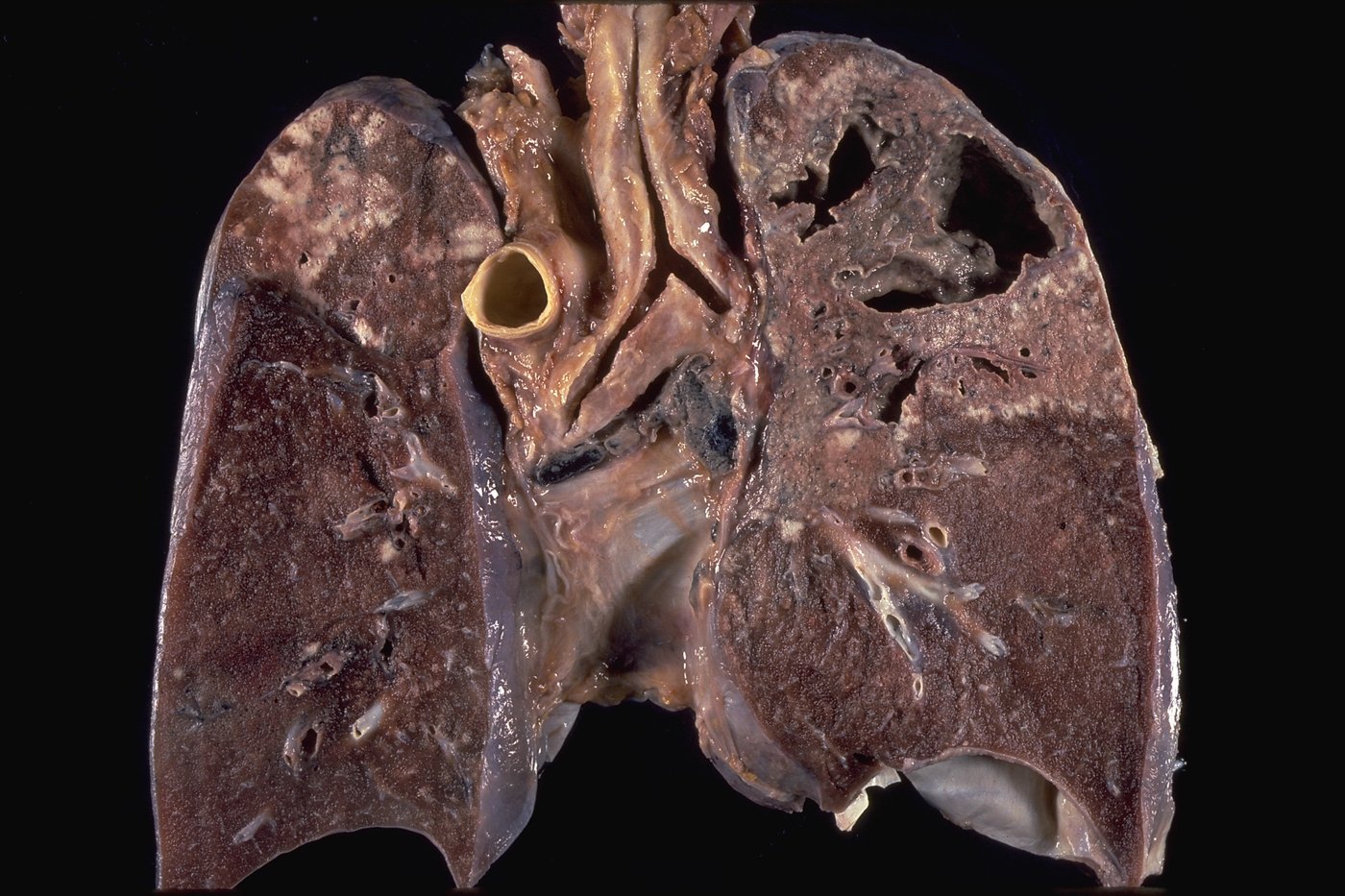
Practise naming specimens and slides quickly, then saying what they show. In a steeplechase or spotter, you move between stations with a fixed time at each. One student told us the practical stations in our app were "one of the parts that captured me".
For each specimen or slide you study:
- Name the organ and the lesion.
- Give two or three features that support your answer.
- Be ready for a short follow-up, such as a cause or a complication.
Your gross and microscopic morphology rows from the table are what you'll need here. Look at real pots and slides in the lab when you can, since pictures in a book don't always look like the specimen in front of you.
How do I prepare for the pathology viva?
Practise answering aloud, with another person asking the questions. Knowing something and saying it clearly to an examiner aren't the same skill.
The students we interviewed did this in different ways. One practised the viva aloud with friends. Another asked classmates who'd gone in first what they were asked. One had an AI tool make an audio file of viva questions, with a ten-second pause before each answer. Another reread her written answers before the viva.
Start with a definition, then move through the headings in order. If you don't know an answer, say so and offer what you do know about the disease.
Should I study pathology together with pharmacology and microbiology?
Yes, link them where you can. One student told us the specialties are taught apart but questioned together in class, with lecturers saying things like "you should have done this in pharmacology".
Take one disease and follow it across the subjects. For tuberculosis, that means:
| Specialty | What to link |
|---|---|
| Microbiology | The organism, its stains and how it's cultured |
| Morbid anatomy | Granulomas, caseation, and primary versus post-primary disease |
| Haematology and immunology | The immune response that forms the granuloma |
| Chemical pathology | The CSF, pleural fluid and liver tests |
| Pharmacology | The drugs, how they work and their side effects |
Studying this way means one disease gives you material for several papers, and a viva question that crosses subjects is less likely to catch you out.
Can I use AI to study pathology?
You can, but check what it tells you against your lecture notes or textbook. Five of the six students we interviewed used AI tools. They used them to turn slides into multiple-choice questions, explain hard slides, turn lecture recordings into notes, and make flashcards.
These tools can be wrong. In a 2023 study, ChatGPT scored 52.4% to 75.0% on US licensing exam questions, near the pass mark (Kung et al., 2023). Newer tools do better, but still make mistakes. Use AI to make questions to test yourself on, rather than to read answers you won't check.
Practise it
Our tuberculosis module takes one disease through each specialty, with questions to test yourself as you go.
Sources
- Dunlosky J, Rawson KA, Marsh EJ, Nathan MJ, Willingham DT. Improving students' learning with effective learning techniques. Psychol Sci Public Interest 2013;14(1):4-58
- Kung TH, Cheatham M, Medenilla A, et al.. Performance of ChatGPT on USMLE