Laboratory tests
Key facts
- A negative test isn't always conclusive; the skin test is negative in up to a third with active lung disease.
- GeneXpert detects M. tuberculosis DNA and rifampicin resistance within hours, but can't tell live bacilli from dead ones.
- A tuberculin test is positive from 5 mm with HIV, 10 mm in high-risk groups and 15 mm for others.
The microbiology laboratory looks for the organism under the microscope, grows it, then tests it against the drugs: microscopy, culture and sensitivity. For tuberculosis it also uses molecular tests and tests of the immune response.
Ziehl-Neelsen
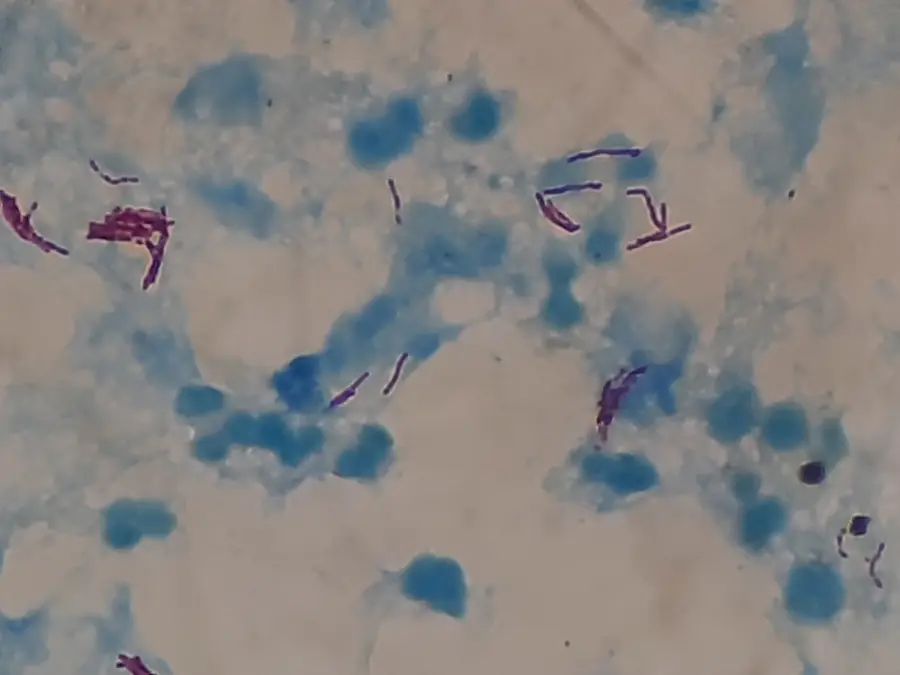
- What you see
- Red rods on a blue background.
- What it tells you
- Whether acid-fast bacilli are present, and roughly how many.
- What it can't tell you
- The species or drug resistance. It can't tell M. tuberculosis from the non-tuberculous mycobacteria, and it's often negative when there are few bacilli.
- Time to result
- Same day.
Auramine-rhodamine
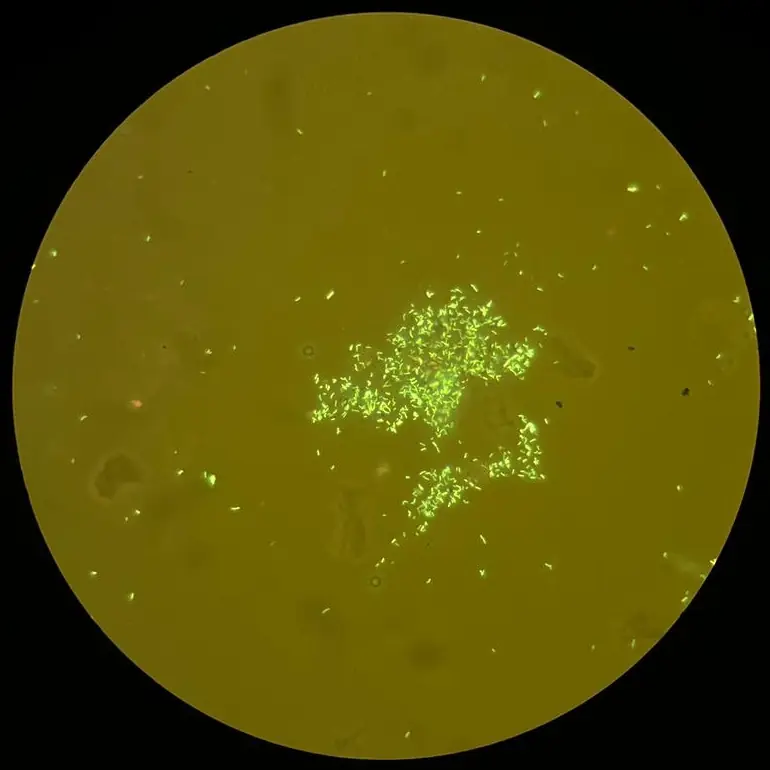
- What you see
- Fluorescent yellow-green rods on a dark background.
- What it tells you
- Whether acid-fast bacilli are present, and roughly how many. Fluorescent rods are quicker to find than rods stained with Ziehl-Neelsen.
- What it can't tell you
- The species or drug resistance, and it is often negative when there are few bacilli.
- Time to result
- Same day.
Rapid molecular test (GeneXpert MTB/RIF)
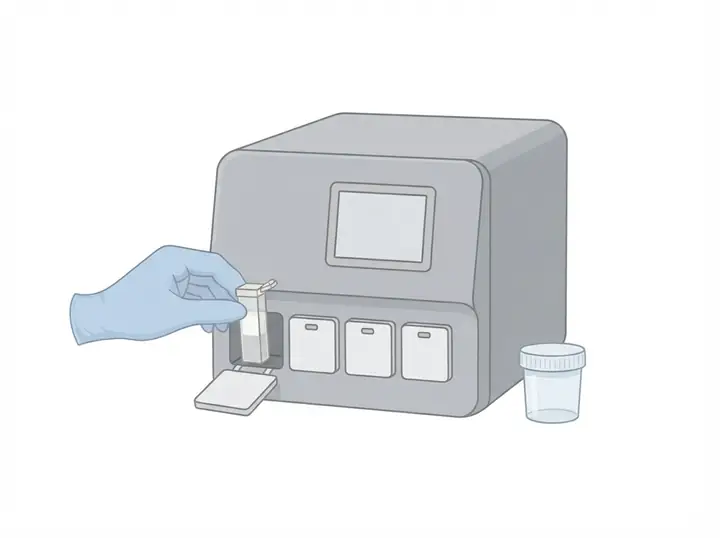
- What you see
- A printed result: M. tuberculosis detected or not, and rifampicin resistance detected or not.
- What it tells you
- Whether M. tuberculosis DNA is in the sample, and whether the organism is resistant to rifampicin.
- What it can't tell you
- Whether the organisms are viable, or resistance to drugs other than rifampicin.
- Time to result
- Within hours.
Culture
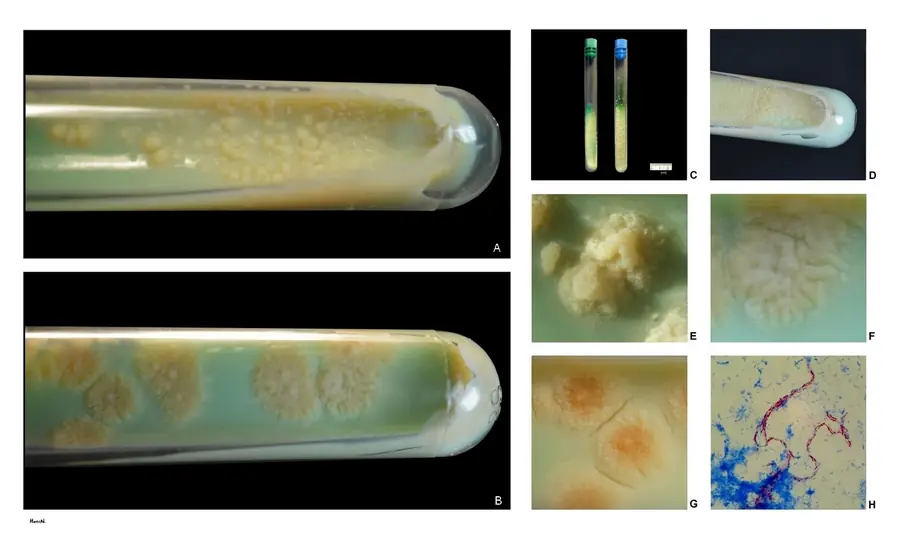
- What you see
- Rough, dry, buff (cream-coloured) colonies that clump together on Loewenstein-Jensen medium. A Ziehl-Neelsen smear of the colonies confirms them.
- What it tells you
- The species, and susceptibility to each drug.
- What it can't tell you
- A quick answer.
- Time to result
- Up to six weeks on solid medium; about two weeks in liquid culture.
Tuberculin skin test
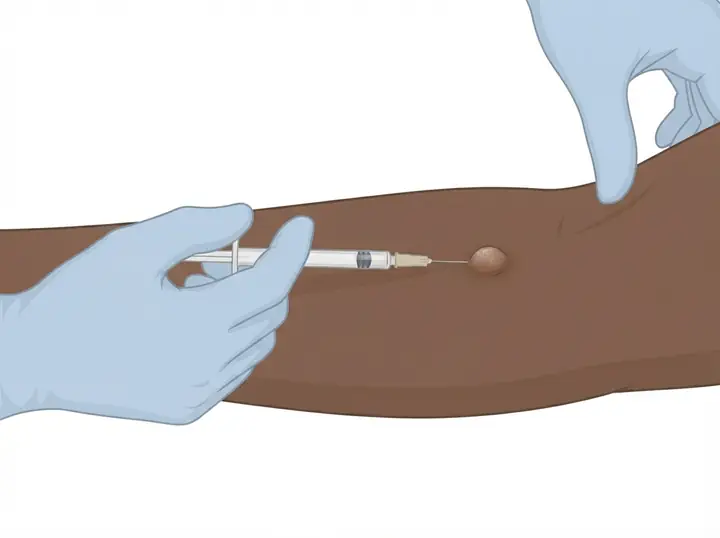
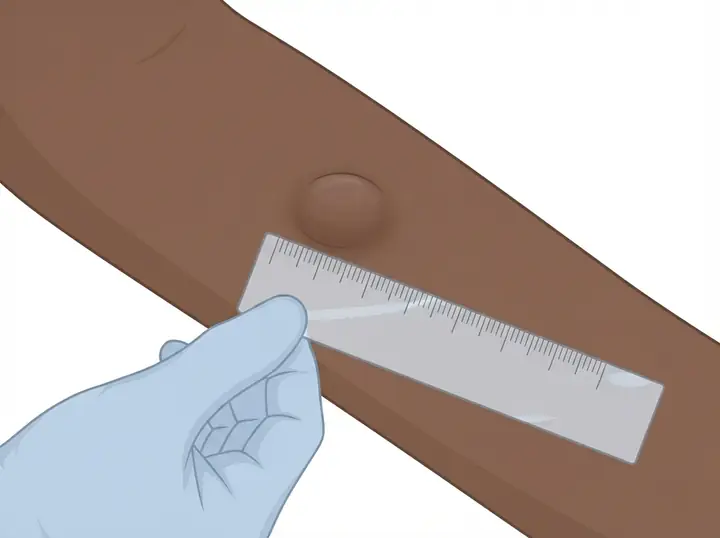
- What you see
- Induration (a firm swelling) where purified protein derivative was injected, measured across in millimetres. Erythema does not count.
- What it tells you
- Whether the person has been infected at some time.
- What it can't tell you
- Whether disease is active now. BCG, and infection with other mycobacteria, can make it positive. It can be negative in up to one in three people with active lung disease, and in anergy: steroid use, malnutrition, sarcoidosis, Hodgkin lymphoma, AIDS, some viral infections and overwhelming tuberculosis.
- Time to result
- Read at 48 to 72 hours, at a second visit.
Interferon gamma release assay
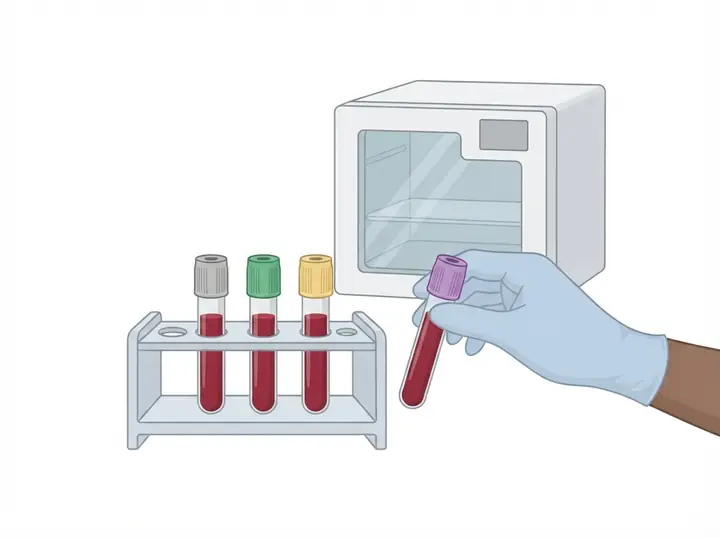
- What you see
- A blood result: how much interferon gamma the patient's lymphocytes release when they meet tuberculosis antigens.
- What it tells you
- Whether the person has been infected at some time. BCG and most non-tuberculous mycobacteria don't make it positive, and it needs only one visit.
- What it can't tell you
- Whether disease is active now.
- Time to result
- A day or two.
| Who is tested | Positive from |
|---|---|
| People with HIV, or on immunosuppression | 5 mm |
| People from a high-incidence country, which includes every sub-Saharan African country, healthcare workers, former prisoners, and people with diabetes or renal failure | 10 mm |
| Everyone else | 15 mm |